

Image Credit: The Goonies (1985) movie poster by Noriyoshi Ohrai

I’ve earned a bit of a reputation. Picture a pirate like One-Eyed Willy in The Goonies. Bold, strategic, and ready to steer their crew into uncharted waters. The kind of leader whose name gets mentioned with a mix of awe and a little fear. Known for setting high expectations and pushing people outside their comfort zone, but never abandoning the ship. The reward? Discovering hidden potential in people they did not know they had.

FYI: I genuinely can’t see out of my left eye, but that’s another story.

The Map Matters

Leading a team is like hunting for treasure, navigating traps, and finding hidden gems. The value is already there. Leadership is the decision to go looking for it. Every high performer on your team has rare capabilities, but if left to their own devices, they may never surface (HBR, 2024).

The secret is having a good map. In my experience, the map needs to offer clear roles, accountabilities, and expectations. When people know what’s expected of them and the boundaries they can explore, they feel empowered to contribute in new ways and continually raise the bar.

Like never before, we’re experiencing exponential change in how we work and what our customers expect. Without guidance, employees can get stuck in the day-to-day and miss the bigger picture.

Henry Ford is often credited with saying, ‘If I had asked people what they wanted, they would have said faster horses.’ The same applies to future leaders, who often can’t see their own potential or how much more they could contribute. If we let employees keep doing what they’ve always done, we may never see the ideas, innovations, and strategic thinking they can deliver (Forbes, 2025).

X Marks the Spot

For me, high expectations are the X on the map. They mark the goals that push people beyond what they think is possible. But aspirational goals alone aren’t enough; we also need to prepare them for any headwinds they may face. Treasure hunts aren’t successful if the captain abandons the crew halfway through the adventure.

Here’s what I know. Even when people resist being pushed outside their comfort zone, they often look back and feel proud of their accomplishments and new perspective. The right scaffolding lets them take risks and gain confidence. Adam Grant emphasizes in Hidden Potential that leaders must offer structure, support, and guidance to help people stretch their capacity. When you ask someone to operate at the next level, you need to be there with them, offering resources, advice, and the occasional nudge (Grant, 2023).

And the best part? They won’t like it at first. They’ll thank you later.

“If your actions inspire others to dream more, learn more, do more and become more, you are a leader.” – John Quincy Adams

The Role of the Captain

Every team member has unique potential waiting to be unlocked. Think of yourself as the captain of an expedition. When people join a new team, they need to be ready for the adventure. It can feel intimidating, especially for those comfortable in their roles. Our job isn’t to dig the treasure for them. But without direction, people default to execution over impact. By investing in them, challenging strategically, and showing trust, they grow personally, and elevate the entire team (HBR, 2024).

Hunting for Treasure

I’ve seen these approaches work in practice, with employees often walking away surprised by what they can achieve. Here are a few tactics you can try to unlock potential on your team:

Set clear X’s on the map – Be explicit about what success looks like. Define the goal, the expectations, and the impact you’re aiming for. Clarity gives people the confidence to take ownership.

Boldly explore – Ask your team what they think could be done differently. Let them bring ideas to the surface. High performers on your team have a keen understanding of the work and they need permission to think bigger.

Provide scaffolding – Don’t just ask for more, make sure you offer the tools, resources, and coaching they need. Scaffold their growth so they feel supported while being challenged.

Celebrate small discoveries – Every step forward, every small success, is a gem. Recognize the wins and let people know the impact they’re having. Confidence grows when contributions are seen and valued (HBR, 2024).

Watch the ripple effect – When someone on your team steps up and begins thinking strategically, their energy spreads. Teams start to operate differently when they see what’s possible. Small shifts can spark big change.

“A leader takes people where they want to go. A great leader takes people where they don’t necessarily want to go, but ought to be.”
— Rosalynn Carter

Discover the Jewels

As a collective, your team will create more value and help drive organizational success. But the reward isn’t just the completed project or the metrics met. It’s the new-found confidence, the expanded perspective, and the realization that individuals can contribute at a higher level than they ever imagined. When your team discovers their hidden potential, they stop being doers and become game changers (Grant, 2023).

Finding “the rich stuff” takes a leader who cares about their people, challenges the status quo, and helps them reach their full capability. It’s uncomfortable at first. High performers may resist since they’ve been doing well already, but with the right map, clear expectations, and your support, they’ll rise to the occasion. And you’ll get to watch them unlock potential that transforms your team, your organization, and themselves.

“The key to successful leadership today is influence, not authority—and unlocking potential in others is the ultimate form of influence.” — Ken Blanchard

Look at your team. Where is the untapped potential? Are you ready to lead the hunt and discover it together?

References:

Forbes. (2025, June). 7 key factors for distinguishing between performance and potential. Forbes. https://www.forbes.com

Grant, A. (2023). Hidden potential: The science of achieving greater things. Viking.

HBR. (2024, October 8). Stop ignoring your high performers. Harvard Business Review. https://hbr.org/2024/10/stop-ignoring-your-high-performers
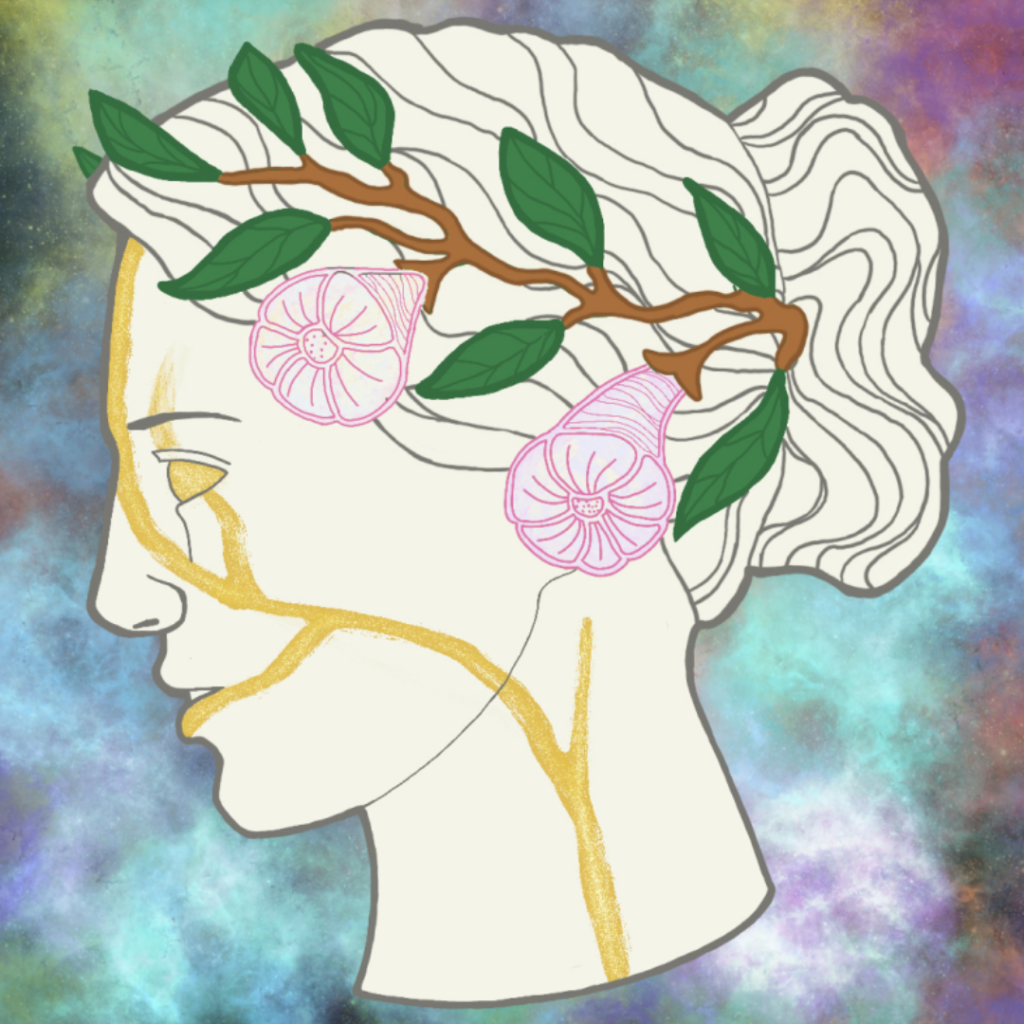

Artist: Rachelle Cook

“The world breaks everyone, and afterward, many are strong at the broken places.” — Ernest Hemingway

Everyone wants to be more authentic, right? Still, most of us feel the pressure to keep it together—head high, shoulders back, push through. Never let them see you sweat. The thing is, relationships aren’t built on perfection. They’re built on being real. So, maybe the strongest thing we can do is stop performing and start showing up—cracks and all.

None of us are perfect. None of us arrive at success unscathed. What if the cracks—the setbacks, the failures, the hard lessons—are the most powerful part of our story?

If you’ve never heard of kintsugi, let me introduce you. It’s the ancient Japanese art of repairing broken pottery with gold. Instead of hiding the flaws, it highlights them—honouring imperfection as part of the object’s history. The once-broken piece becomes even more beautiful because it was broken and made whole again.

Kintsugi is both a metaphor and an art form—a powerful reminder of how we grow through life’s fractures. I carefully choose each piece of art to complement my writing—this one is especially meaningful. Don’t miss the artist’s story at the end.

We All Have Cracks

There are moments that can shatter us—loss, failure, or identity crises that creep in during video calls, over dinner tables, or in hospital corridors. You glance in the mirror and barely recognize yourself.

I’ve spent plenty of time hiding my cracks—pushing down disappointment, masking struggles, and silencing doubts. And I can tell you from experience—it’s exhausting. Being a leader, a parent, a caregiver—it’s not just about what we do, but what we carry. The hardest part isn’t the fall. It’s staying steady for others while we’re breaking under the pressure.

But here’s the truth: the strongest, most grounded people I know are the ones who’ve been broken—and rebuilt—with grace, grit, and gold. Not despite their scars, but because of them.

That’s the quiet power of recovery. The beauty in the repair. The gold in the cracks.

“I can be changed by what happens to me. But I refuse to be reduced by it.” – Maya Angelou

Strong Looks Different Now

Let’s be honest—life is hard, and the world is changing. We’re starting to redefine what strength looks like. It’s no longer about pushing through at all costs. Today, strength is about leading with empathy, honesty, and the courage to embrace what makes us human.

As Harvard Business Review notes, “leaders who practice self-compassion are more resilient, less prone to burnout, and better equipped to support their teams through challenge and change” (Hougaard & Carter, 2018). Healing comes from acknowledging the cracks and choosing to repair them with purpose.

Inspired by the kintsugi philosophy, here are a few principles to help us navigate the stress and near-breaking points life inevitably brings.

Authenticity over Perfection – The polished, “all-together” image we often feel pressured to maintain can be draining and unsustainable. Real leadership begins with being genuine—bringing your full self, flaws, and all. That honesty builds trust and opens the door to deeper connection. The right balance of transparency and authenticity isn’t a weakness—it’s a superpower.

Humility as a Strength – Adam Grant (2023) introduces the idea of confident humility, a powerful mindset that blends self-assurance with openness. It’s knowing when to trust your experience, and when to say, “I don’t know.” Just like gold in kintsugi, it doesn’t cover the imperfections—it honours them, adding depth and character to the whole.

Power of Connection – True connection happens with people who don’t flinch when you say, “I’m not okay.” For me, it’s important that people feel safe to express emotion without judgment. When we lead with empathy, we create environments where people feel safe to share, take risks, and innovate—unlocking their full potential (Brown, 2022).

Recover with Purpose – Sometimes, we drop the bowl. Mistakes happen—even with the best of intentions. While we can’t undo the damage, we can choose how to move forward. The goal isn’t to hide the cracks but to repair them with care—and emerge stronger. Recovery is about learning, adapting, and embracing reinvention as part of the journey.

Honour the Process – Have you ever felt broken? I have. In that blurry space between what was and what’s next, it’s easy to lose sight of yourself. But that space is where transformation happens. We owe it to ourselves—and each other—to sit with the discomfort, accept what is, and keep moving forward. Being “broken” isn’t a flaw. It’s the beginning of something stronger, wiser, and more connected.

Want to put these ideas into practice? Start here.

1) Own the Cracks. Acknowledge mistakes and setbacks honestly.
2) Choose Presence Over Perfection. Build trust by being your real self.
3) Pause Before Reacting. Take time to reset instead of powering through.
4) Ask for Help. Have the confidence to say, “I don’t know.”
5) Model Healthy Repair. Show others that healing is part of the process.

If you’ve checked even one box, welcome to the beautifully cracked club—we’re all just figuring it out with a little gold and a lot of glue.

“There is a crack in everything. That’s how the light gets in.” – Leonard Cohen

About the Artist

Rachelle Cook, who lives with the rare diseases CPVT and Harlequin Syndrome, uses the Japanese art of kintsugi—as a metaphor to embrace both her internal and visible differences. The gold in her artwork traces the part of her face that changes colour due to Harlequin Syndrome, symbolizing not just the impact of her conditions, but her journey toward self-acceptance and honoring her full story (EveryLife Foundation, n.d.).

References:

Hougaard, R., & Carter, J. (2018). Compassionate leadership is necessary — but not sufficient. Harvard Business Review.

Grant, A. (2023). Hidden potential: The science of achieving greater things.

Brown, B. (2012). Daring greatly: How the courage to be vulnerable transforms the way we live, love, parent, and lead.

Edmondson, A. C. (2019). The fearless organization: Creating psychological safety in the workplace for learning, innovation, and growth.

EveryLife Foundation (2025) https://everylifefoundation.org/portfolio-item/kintsugi-quinn/

Artist: Kinjai Gorakh

Karma = Action.

Imagine karma as the spiritual equivalent of Newton’s Law of Motion. “For every action there is an equal and opposite reaction”.

It’s simple really: what goes around comes around. This means our actions— whether positive or negative—eventually come back to us. If this concept holds true, it emphasizes that our actions have the power to shape our experiences, whether for better or for worse.

Remember, karma’s a bitch (or boomerang, if you prefer). So, it’s probably smart to make time for some self-reflection. We need to focus on the positive and steer clear of the not-so-great stuff. It’s about being mindful of our actions and spreading good juju. Life’s too short to dwell on negativity, anger, or resentment—or to treat others poorly.

“Do not overlook negative actions merely because they are small; however small a spark may be, it can burn down a haystack as big as a mountain.” — Buddha

I don’t know about you, but if karma is the great equalizer, then I feel pretty good about what I’m putting out there. I work hard to offer kindness and respect to everyone—from friends and family to colleagues and strangers. Right now, I’m learning to practice patience and stay present, not just for my own personal growth, but also to positively impact those around me.

It’s natural to wish karma would catch up with those who’ve wronged us, providing a sense of justice and balance. However, fixating on this desire can consume our thoughts and energy, detracting from our own well-being. While it’s tempting to hope for retribution, it’s more empowering to focus on cultivating positive karma for ourselves.

The 12 Laws of Karma are rooted in Hindu traditions and date back to 1500 BC (see below). Although ancient, these laws are still incredibly relevant today. If the energy we emit into the universe eventually comes back to us, here are some personal insights and practices I’ve found valuable in amplifying reciprocity:

Kindness: It doesn’t take much. We can take a breath, rise above our own ‘stuff,’ and offer a smile or act of kindness to those around us. We often underestimate how one simple gesture can brighten someone’s day and create a ripple effect of goodwill.

Generosity: Offering our time, resources, and support can be the greatest gift. As coaches and mentors, we can make ourselves available to those who need encouragement, guidance, or simply a listening ear. It’s about paying it forward—remembering when you received a helping hand and passing it on to others.

Positivity: My kids might groan when I encourage them to stay positive, but I believe it’s crucial. Focusing on negativity or things we can’t control is unproductive. I embrace being a ‘realistic optimist’—acknowledging challenges while maintaining confidence in our ability to overcome obstacles through effort and perseverance.

Gratitude: Life presents us with a mix of joyful, challenging, and difficult situations. Our well-being hinges on how we perceive these experiences, what we learn from them, and how we find ways to appreciate the good in our lives—and help others do the same.

Respect: Every individual, regardless of their personal journey, deserves to be treated with respect. By recognizing and valuing each person’s unique perspective and treating them with dignity, we build trust and create an environment where everyone feels a sense of belonging.

Empathy: Over the years, I’ve discovered the importance of validating others’ emotions. Although we may not fully grasp someone else’s concerns, we can offer them a space to express their feelings and respond with compassion. By setting aside our own judgments, we not only support their personal well-being, we build stronger relationships.

“How people treat you is their karma; how you react is yours.” – Wayne Dyer

So, if you’re reading this, I’m sending positive energy your way and reminding you that our actions and attitudes have the power to transform our lives and those around us. Together, we can create a ripple effect of kindness and shape our own destinies.

Twelve Laws of Karma (Peaceful Mindset, n.d.)

1) The Great Law: We reap what we sow.
2) The Law of Creation: Life requires our participation.
3) The Law of Humility: Accept reality to change it.
4) The Law of Growth: Personal growth starts within us.
5) The Law of Responsibility: Own our actions and circumstances.
6) The Law of Connection: Everything in the universe is connected.
7) The Law of Focus: Focus on one thing at a time.
8) The Law of Giving and Hospitality: Practice what you believe.
9) The Law of Here and Now: Live in the present moment.
10) The Law of Change: History repeats until we learn.
11) The Law of Patience and Reward: Rewards come from persistent efforts.
12) The Law of Significance and Inspiration: Value the impact of your actions.

References:

Karma Origin, Religions & Philosophies | What is Karma? Study.com. https://study.com/academy/lesson/karma-origin-religions-philosophies.html

Peaceful Mindset. (n.d.). 12 laws of karma explained in detail: A guide. Retrieved from https://peacefulmindset.com/12-laws-of-karma/

AI Generated: Unknown

As long as you have a chip left and a chair to sit in, you’re in the game” – Michael J Fox

The best advice I’ve ever received was about 12 years ago If you don’t believe in yourself, no one else will. Basically, I was being called on my bluff.

That moment was a turning point, I knew going forward that it wasn’t enough for me to “believe” I was worthy of my ambitions, I needed to “know” it – deep in my soul.

A more recent “ah ha” came from listening to Jamie Kern Lima’s perspective on self-confidence vs. self-worth. She shares that “self-confidence is based on what’s going on for us on the outside” and “self-worth is the deep internal knowing that we’re worthy of love and belonging exactly as we are.”

Looking back, I’ve made a lot of brave choices in my life. When things didn’t feel right, something would nudge me to believe there were better options. I never really understood how I developed this “poker radar” or why I chose to act on it, time and time again. I just always knew when to fold and walk away.

Now I wonder, have I been betting on my self-worth without realizing it?

Don’t get me wrong, it hasn’t been easy. There have been a ton of bad beats and downswings along the way. The kind that take you out at the knees. But I’ve managed to make tough decisions and cope with difficult situations by learning how to handle adversity and put negative experiences into perspective. I think this is a gift and I’m grateful.

Like poker, life is a game of chance and strategy. So, when we’re up against our toughest opponent—ourselves—how do we play?

Let No Experience Go Wasted – Every hand we’re dealt adds to the story of who we are. We need to recognize that the good, the bad, and the ugly moments all contribute to our personal growth, giving us an opportunity to discover the depths of our joy, strength, and resilience. What’s important is that we learn, evolve, and adapt – making us wiser and more confident next time.   

Be Yourself, Everyone Else is Taken – Like Brene Brown (2014), I believe that most of us will take messy and real over flawless and inauthentic every time. In a world teeming with expectations on how to look, act, and present ourselves, it’s exhausting trying to fit into molds that weren’t made for us. So, let’s get real. The best relationships and experiences start with shedding the poker face and showing up as who we really are.

“To be yourself in a world that is constantly trying to make you something else is the greatest accomplishment” – Ralph Waldo Emerson

Feed the Good Wolf – In the story of two wolves we learn that there are two kinds of wolves (or forces inside us), one is evil, the other is good, and the wolf that wins is the one you feed. The evil wolf is anger, envy, arrogance etc., and they are also our inner critic, the one that puts you down and calls out your failures. While it’s okay to acknowledge these negative emotions, we don’t need to give them our time or attention. We can choose to nourish the good wolf – kindness, humility, generosity, and compassion.

Know Your Strengths – Your strengths represent the unique ways you think, feel, and behave that not only drive peak performance, but also serve as a catalyst for building confidence. Character strengths are the ones that really matter, they’re based on values and the way you show up. A real master knows how to leverage their strengths and reinforce belief in their ability to make a positive impact on the game (Jones, 2023).

Your value doesn’t decrease based on someone’s inability to see your worth” – Unknown

Don’t Settle – Life’s too short to be stuck in unhealthy, unhappy, or unfulfilling situations. Our instincts act like a compass, guiding us towards authenticity and reminding us that we have value, just as we are. While we can’t rely solely on intuition, these cues can prompt us to push through the fear and doubt that hold us back from living our best life.

Over the years, I’ve had many people express how much they admire my self-confidence. Now I understand that nurturing my self-worth is so much more important. It’s time to ante up. Better yet, let’s go “all in” and bet on our inherent value with unwavering confidence and courage.

“True belonging and self-worth are not goods; we don’t negotiate their value with the world. The truth about who we are lives in our hearts. Our call to courage is to protect our wild heart against constant evaluation, especially our own” – Brene Brown

Pop Quiz: How do you know if you have high self-worth? (Vanbuskirk, 2023)

  • 1. You express your opinions, regardless of what others think.
  • 2. You’re confident in your abilities.
  • 3. You don’t let challenges hold you back.
  • 4. You treat yourself with respect and don’t put yourself down.
  • 5. You don’t let a setback change how you feel about yourself.
  • 6. You set clear boundaries and don’t allow people to overstep them.
  • 7. You trust yourself to navigate life and make good decisions.

References:

Lima, J. K. (2024). Worthy: How to Believe You Are Enough and Transform Your Life. Hay House, Inc.

RefreshMH. (2016, February 24). The Story of Two Wolves – Urban balance. Urban Balance. https://www.urbanbalance.com/the-story-of-two-wolves/

Brene Brown advice – How to be yourself. (2014, July 21). Oprah.com. https://www.oprah.com/spirit/brene-brown-advice-how-to-be-yourself/all

Jones, S. (2023, April 19). How Strengths Fuel Your Confidence. Psychology Today. https://www.psychologytoday.com/ca/blog/real-women/202304/how-strengths-fuel-your-confidence

Kopp, C. (2024, March 13). 10 signs you have a strong sense of self-worth. Hack Spirit. https://hackspirit.com/signs-you-have-a-strong-sense-of-self-worth/

Vanbuskirk, S. (2023b, February 21). Why It’s Important to Have High Self-Esteem. Verywell Mind. https://www.verywellmind.com/why-it-s-important-to-have-high-self-esteem-5094127

Artist: Kamala Jonze

“We shift ourselves not in sweeping pivots, but in movements so tiny that they are hardly perceptible, even in our view. Years can pass before we finally discover that, after handing over our power piece by small piece, we no longer even look like ourselves” – Alicia Keys

We all experience obstacles in life. It’s part of being human. The trick is to figure out how to navigate difficult circumstances and emotions without losing ourselves or jeopardizing our well-being.

So, I thought I’d drop a few “F” bombs, the kind that can get in my way, make me feel vulnerable and take me off track. Maybe you can relate.

Fear holds us back. It can be real, or in many cases, it’s derived from our own subjective view of reality. It can keep us stuck in unproductive patterns that hinder us from accomplishing our goals. We can overcome our fears by bravely naming them (even if they’re embarrassing), asking where they originated, and finding a safe space to test our limiting beliefs (Zucker, 2022). For me, it manifests in the pressure to perform. Through coaching, I’ve learned that there were times growing up when my key accomplishments were never acknowledged or celebrated. I think I still face this today, the fear of not being seen, heard, or recognized for my contributions. And…it gets in the way.

Failure isn’t a bad thing. No one is perfect, we all fall short of expectations from time to time. What matters most is how we recover, learn, and leverage our experiences to achieve better outcomes. We’ve all had our share of failures, so I understand this one — I hope you do too. Being resilient and recognizing that we can’t change the past is a critical perspective we all need. We can’t hit rewind, but we can be compassionate, self-reflect and embrace failure as a valuable lesson for transforming setbacks into opportunities. As we fail forward, mastering the shift from self-awareness to self-management plays a pivotal role, reminding us of the power we hold in navigating challenges and growth.

“We need to accept that we won’t always make the right decisions, that we’ll screw up royally sometimes – understanding that failure is not the opposite of success, it’s part of success” – Arianna Huffington

Friction helps drive better, more informed decisions. Artificial harmony is the real enemy. None of us win when we avoid conflict and agree on matters even when we don’t believe they’re the best decision. On one hand, there should be zero tolerance for bullying and on the other, we need to encourage healthy debate. According to Adam Grant (2021), one way to do this is to think like a scientist. It allows us to present a balanced case and eliminate bias when discussing hot topics. By embracing the possibility of being wrong, it increases humility and curiosity to discover new information. I’m a big fan of considering my initial thoughts or ideas as a ‘rough draft’ and then being open to others weighing in to make it better. None of us have all the answers, in scientist-mode, we can test our theories and be eager to uncover new ways of thinking.

Fairness is an illusion. Life’s not fair, we all know it and we need to deal with it. That may sound harsh, but even for someone like me, who sees fairness as a core value, I need to modify how I react when experiencing inequities. Sometimes, as leaders, we’re obligated to make tough choices, whether they seem fair or not and personally, we have a choice in how we respond to decisions outside of our control. When challenges arise, we can complain about life being unfair or we can choose a different path, one that accepts reality and positively contributes to the outcome (Myatt, 2011). Don’t get me wrong, it’s important to stand up for what we believe in, but how we do that matters, and we may not always end up on the winning side.

“Life is not fair, it never was, it isn’t now, and it won’t ever be. Do not fall into the trap, the entitlement trap, of feeling like you’re a victim, you are not” – Matthew McConaughey

Fight, Flight, Freeze, and Fawn are all stress responses designed to protect us from perceived threats. When taken to the extreme these responses can wear on us, but when leveraged appropriately, they can help us overcome tough situations. A healthy fight response can help us stand up for ourselves, taking flight can ensure we disengage when needed, freezing slows us down to reliably assess and when you feel yourself fawning, it’s a good reminder not to over-apologize or explain (mindbodygreen, 2023). The mind is a powerful thing, and our amygdala fires quicker than our logical prefrontal cortex. The better we understand this nuance, the better we can self-manage when faced with personal or workplace hazards.

Now, it would be futile for me to call out every painful “F” word, I know there are many. What we all need is the fortitude to keep going. It’s not easy, it takes effort to recognize the stressors that chip away at us and cause us to shift who we are and how we show up.

In the end, we need the freedom to be our true selves, strive to be better every day and be there for each other in the vulnerable moments that shape the people we become.  

References:

Zucker, R. (2022, August 23). Facing the fears that hold you back at work. Harvard Business Review. https://hbr.org/2022/08/facing-the-fears-that-hold-you-back-at-work

Grant, A. (2021). Think again: The Power of Knowing What You Don’t Know. Random House.

Myatt, M. (2011, December 12). Life isn’t fair – deal with it. Forbes. https://www.forbes.com/sites/mikemyatt/2011/12/12/life-isnt-fair-deal-with-it/?sh=5c0d7d2e543f

mindbodygreen. (2023, August 8). 4 Ways People May Be Responding To Trauma Without Even Realizing It. Mindbodygreen. https://www.mindbodygreen.com/articles/fight-flight-freeze-fawn-trauma-responses

Humility by Betty Albert

I’ve always considered “relationship building” to be one of my core strengths. Yet, I continue to learn more about what it takes to build meaningful connections in the workplace. What I know for sure is that we need each other to be successful.

“Alone we can do little; together we can do so much” – Helen Keller

What I’m starting to uncover with the help of inspiring leaders and authors, is that surface relationships only get us so far. We need to go deeper. Connect with people. Make sure that our peers, colleagues, and followers know they can trust us and that we have their best interest at heart. Only then can we lean into tough conversations, inspire each other, and work together to achieve greatness.

For me, I’m learning how to show vulnerability and bring my whole self to work – it’s what I want others to do, so I need to be a role model. I had a leader who used to occasionally say “it’s nice to see a chink in your armour” — now I get it. He was telling me it’s okay not to be perfect. And reveal my flaws.

As leaders and teammates, we have a responsibility to show up for those around us. We need to do our part to build healthy working relationships that contribute to an inclusive culture, personal fulfillment, and high performing teams.

So, as we continue to work towards becoming our best selves, here are a few things I’m learning about how to improve relationships, foster strong team dynamics and lead with intention…

Trust – Consider authenticity (I experience the real you), logic (I know you can do it) and empathy (I believe you care about me) as key drivers of trust. If we reflect on our own journey, we may see areas where these drivers have been compromised. It’s possible that we need to bring more of our “real self” to work, communicate our ideas more effectively or focus on what others need versus our own goals (Frei, 2021).

Followership – Great partnerships require leaders and followers. The roles are equally important. Leadership includes coaching, mentoring, cascading messages and relationship framing while followership requires decision advocacy, meeting expectations, keeping leaders informed and honouring organizational culture. We all play both roles, depending on the situation, so we need to instinctively know when to switch between the two (Hurwitz, 2015).

Blind Spots – There’s incredible power in being able to give and ask for “radically candid” feedback that is kind, clear, specific, and sincere. It means we need to care deeply about other people and be able to challenge them directly when offering our opinion (Radical Candor, 2022). We collectively get better when we help each other see how our actions may be impacting key relationships or team cohesion.

Virtues – According to Patrick Lencioni (2016), there are three virtues, when combined, that make up an ideal team player. Making teamwork part of our organizational culture requires us to be role models by demonstrating humility (lack ego or concern for status), hunger (look for more to do, learn, take on) and people smarts (have common sense and be interpersonally appropriate). People who have all three can be counted on to put relationships and team performance above their own interests.

Vulnerability – Being vulnerable proves you have the courage to be you. We can demonstrate vulnerability by asking for help, admitting mistakes, apologizing, challenging power, and exposing our feelings. By opening ourselves up, we create deeper connections, encourage creativity, remove ego from the equation, and build a strong bond of loyalty (OrgHealth, n.d.).

Belonging – People feel included when they get invited to the table, and gain a sense of belonging when their voice matters during decision-making. We need to be conscious about creating a culture where people can bring their whole selves to work, have the psychological safety to lean in with a different view and feel valued for their contributions.

Now, let’s be clear, I don’t have this all figured out. I am and always have been a work-in-progress. What’s interesting about this research is that it helps us take relationship building to the next level. It’s a call to action to be better, do better, and make every interaction count. I’m “all in” for that!

“To build courage in teams and organizations, we have to cultivate a culture in which brave work, tough conversations, and whole hearts are the expectations, and armor is not necessary or rewarded” – Brene Brown

References:

Frei, F. X. (2021, August 31). Everything Starts with Trust. Harvard Business Review. https://hbr.org/2020/05/begin-with-trust

Hurwitz, M., & Hurwitz, S. (2015). Leadership is Half the Story: A Fresh Look at Followership, Leadership, and Collaboration. University of Toronto Press.

Radical Candor. (2022). Radical Candor | Kim Scott’s Proven Feedback Framework. Radical Candor. https://www.radicalcandor.com/our-approach/

Lencioni, P. M. (2016). The ideal team player: How to Recognize and Cultivate The Three Essential Virtues. John Wiley & Sons.

Vulnerability: A How-To Primer | Articles | OrgHealth. (n.d.). https://www.orghealthteam.com/blog-library/vulnerability-a-how-to-primer

Artist: Piet Van Bergen

I don’t surf, but if I did, I imagine it feels a bit like life. Sometimes you get to ride a gnarly wave and sometimes you get ragdolled. The truth is, we need to learn how to ride all kinds of waves and be ready for anything.

“So, when your life does change, when you are courageous, and fearless and speak out… don’t expect everybody to stand up and cheer for you, because they don’t.” – Ellen Pompeo

I don’t know about you, but this is a lesson I’m still learning. When we embrace change, strive for better or follow our passion, not everyone will be in our corner. And…that doesn’t mean we should stop pursuing our goals.

A good friend recently shared that “…YOU and YOU alone are responsible for pursuing your passions…” and although it will be hard “…you’ll be grateful that you followed your own path, and you didn’t compromise on what might not be right for someone else, but is indeed right for you.”

So, let’s learn how to surf, figure out how to catch the waves that are meant for us and when we wipeout, find the tenacity to paddle hard back into the ocean. Here are a few training tips…

Join the right lineup – Take a look around and find inspiration in more advanced, rad surfers. By observing others, you can pick up a thing or two about how to catch and ride the best waves.

Get used to wiping out – One thing for certain is when we truly challenge ourselves, there will be waves that crush us and cause a few bruises, but it’s all part of the experience.

Shut down your inner kook – When others try to stifle your dreams and self-doubt creeps in, offer yourself some compassion and keep moving forward. We all have to start somewhere.

Wait for the next set – We’re all playing the long game and that requires patience. Spend time reflecting while you get positioned and ready for when something bigger or better comes along.

Get stoked – We get to choose what we value and care about, so channel your energy in a way that generates a feeling of excitement and happiness.

Bottom line, when you’re committed to becoming the best version of yourself, don’t let other people drop in and ruin your ride. The waves will keep coming, catch another one.

“And when I tell you to go, you gotta go. You gotta paddle your little heart out. You can’t hesitate, you can’t pull back, you can’t hold back. No fear.” – Keala Kennelly (Blue Crush)

References:

Surfertoday.com (2023, January 11). The glossary of surfing terms and surf slang. Surfertoday. https://www.surfertoday.com/surfing/the-glossary-of-surfing-terms

TEDx Talks. (2020, May 6). The Imposter Syndrome of the Tall Poppies | Shamane Tan | TEDxCQU. YouTube. https://www.youtube.com/watch?v=y6V9mOa_Sbs

Artist: AKORE

We can all feel broken and bruised from time to time. Sometimes to the point where we want to give up – like we don’t have the energy to go another round. 

I’ve experienced this myself and had the opportunity to coach some super smart, passionate and tenacious colleagues on this very topic. We’ve spent lots of time talking about perseverance and resilience when it comes to overcoming obstacles – both personally and professionally. 

Our worlds are ever changing and we’re all striving to be better, make an impact and be valued for our efforts. When you have bold ambitions and ideas, it’s rarely an easy road to success. It usually includes a lot of ups, downs and crazy curves. 

I truly believe that if we embrace our struggles, they will make us stronger, wiser and more confident.

When you’re “in it”, it can feel like you’re constantly pushing a boulder uphill. And if we have the right level of self-confidence, self-esteem and self-awareness (Siebert, 2005), we can always find the will to get back in the ring, dodge a few jabs and take another swing. 

Resilience is defined as “the capacity to recover quickly from difficulties; toughness.” So let’s do this….

Be patient – After experiencing a set back, step away and take a breath. It’s important to give yourself time to recover, reset and consider tackling the problem from a different angle. Lasting success doesn’t happen overnight. 

Remember it’s a hero’s journey – Be the protagonist in your own story. Like every hero, you need to be pushed outside your comfort zone, find allies, face the dragon, overcome crises and know that you’ll prevail in the end. 

Don’t take it personally – Resistance is rarely about you. Challenge yourself to think about the situation logically, be aware of your own emotional triggers and find a way to respond more clearly vs. giving in to a fight/flight/freeze/fawn reaction (a.k.a. amygdala hijack).

Avoid victimhood – It’s not healthy to pass off responsibility to others and expect them to solve our problems. Make sure you understand your role and how you’re contributing to the success/failure of any situation. Even if an outcome is not your fault, there’s an opportunity for you to learn, grow and get better (Manson, 2016).

Control the controllable – We have to recognize and accept the things we cannot change. The serenity prayer is no joke! Only focus on things you have the power to influence. That means you might have to workaround rules, people or constructs that you don’t like.

Know when to get in the ring – There’s no need to wear yourself down by fighting every time you’re faced with a new challenge. Choose your battles wisely and save your energy for what really matters. It’s okay (and better for your mental wellness) to let some things go. 

“Only a man who knows what it is like to be defeated can reach down to the bottom of his soul and come up with the extra ounce of power it takes to win when the match is even.” – Muhammad Ali

References

Siebert, A. (2005, May 10). The Resiliency Advantage: Master Change, Thrive Under Pressure, and Bounce Back from Setbacks (1st ed.). Berrett-Koehler Publishers.

Manson, M. (2016, September 13). The Subtle Art of Not Giving a F*ck: A Counterintuitive Approach to Living a Good Life (2nd Edition). Harper.

Artist: Butler Cook

“Life moves pretty fast. If you don’t stop and look around once in a while, you could miss it – Ferris Bueller

Business is complex. Information comes at us from every angle possible. As change leaders, we need to be able to pull together seemingly unrelated information from a variety of sources and generate innovative solutions.

For some people this is an innate talent and skill. One I never realized I had until I learned about the Innovator’s DNA. Along with Questioning, Networking, Experimenting and Observing, Associating plays a key role in the five discovery skills and behaviours practiced by innovative people (Dyer, Gregersen, Christensen, Innovator’s DNA).

For me, I’m quick, maybe too quick sometimes to collect information from different meetings and jump to how we can bring it all together. I love being able to understand organizational problems, cut through the complexity and suggest collaborative win/win solutions. It’s super fun and it can be little disruptive.

Bringing seemingly unrelated information together may throw some people off, so it’s important to use it as an opportunity to start the conversation, engage others and see where the new insights take you – together, as a team. And…. when you start “connecting dots”, you’ll be surprised by how many better, more innovative ideas start to surface.

If you’re as passionate about leading change as I am, you never want to miss the opportunity to solve problems for your customers, employees or organizations. So, how do we do this well?

Pay Attention – Always be listening carefully, regardless of the circumstance. Train your mind to consciously aggregate and assimilate information as you get exposed to new insights, problems or projects.

Organize Your Thoughts – Every meeting, presentation or informal interaction has something to offer. As ideas start to percolate, be sure to take notes or draw a mind map to visualize the connections. This will help formulate your thinking and give you a resource to iterate over time.

Ask Questions – Aim to fully understand the information you’re receiving so you can easily articulate how the data, insights or knowledge are somehow associated. Ask curious questions about how the current situation could possibly be related or crossover with other conversations happening in the organization.

Engage Others – Consider bringing together a variety of groups and experts to the conversation (internal and/or external). This will help you uncover how others see the problem, brainstorm solutions, and glean insights from new and divergent perspectives (Manville, Forbes).

Think Big Picture – We can all get siloed in our thinking. We need to stop. Lift your head, look around and consider what else is happening in the organization. The big wins come from understanding problems from a variety of angles and not only focusing on one piece of the puzzle.

“Collecting the dots. Then connecting them. And then sharing the connections with those around you. This is how a creative human works. Collecting, connecting, sharing”. – Amanda Palmer

References

Dyer, J., Gregersen, H., & Christensen, C. M. (2019). Innovator’s DNA, Updated, with a New Preface: Mastering the Five Skills of Disruptive Innovators (Revised ed.). Harvard Business Review Press.

Manville, B. (2015, October 10). Network Leaders Connect The Dots To Innovate. Forbes. Retrieved July 23, 2022, from https://www.forbes.com/sites/brookmanville/2015/10/10/network-leaders-connect-the-dots-to-innovate/?sh=35d424bb653c

Artist: Seema Agrawal

Do you ever have the best intentions to schedule time with someone and then never follow through? From my experience, these moments represent missed opportunities to drive real value from the connections we make in life.

Dr. Brene Brown defines connection “as the energy that exists between people when they feel seen, heard, and valued; when they can give and receive without judgement; and when they derive sustenance and strength from the relationship.”

For me, this happens every time I schedule a coffee date. Lately, as the date comes to an end, I find myself saying “I really enjoyed being in your space today”. And it’s true. Being in the presence of someone I genuinely respect and appreciate gives me joy. It centres me. Rejuvenates me in a way that I can’t perfectly explain…and offers the best kind of reset on whatever might be troubling me.

Sounds great. But how do you make time in your busy schedule to connect with people?

Add it to your “to do” list. Make it a priority. Send an invite. Don’t cancel.

It doesn’t have to be coffee. Find what works for you – maybe it’s a patio after work, a walk in the park, a game of golf or a Zoom meeting (although in-person is way better). As Nike says, “just do it”, you’ll be glad you did, and you can thank me later.

This isn’t fluff. The term “work” is literally embedded in networking. And I can assure you, the effort and time spent always pays off. Tapping into a variety of personal contacts allows us to gain valuable insights, improve our capacity to innovate, and achieve greater personal success (Ibarra & Hunter, Harvard Business Review).

Everyone can benefit from networking, but for women, creating a network of peers that we can tap into is even more important. As we strive to advance in our careers, we face cultural and systemic hurdles that pose unique challenges. Booking dedicated time creates a safe space for other women who have been there, done that, to share their experiences, validate our concerns and offer sound advice (Zalis, Forbes).

Yes, it’s an investment, it requires planning, and it’s worth it. It’s about creating those mutually beneficial relationships that offer a healthy balance of give and take. Here are a few of the benefits I look for in a good coffee date:

Renewed Energy – Sometimes it’s hard to gear up and face what’s next. Breaking the monotony of our regular schedule can provide the recharge we need to come back stronger.

Encouragement – When feelings of self-doubt creep in, we need people who know us best and/or can see us objectively to be our cheerleaders and reassure us that we’re on the right track.

Sense of Belonging – Connecting with like-minded people can give us a sense of acceptance and inclusion. Bringing our whole and authentic self to every conversation is key.

Sage Advice – We all have business or personal problems we’re trying to solve, bouncing ideas off people with diverse, unbiased, and credible perspectives can provide real insight.

Blow Off Steam – Life is not perfect. We all need to say, “what the hell?” sometimes. Having an unfiltered conversation with a trusted confidant can help relieve the pressure.

“Only through our connectedness to others can we really know and enhance the self. And only through working on the self can we begin to enhance our connectedness to others” – Harriet Lerner

References

Zalis, S. (2019). Power Of The Pack: Women Who Support Women Are More Successful. Forbes. Retrieved May 23, 2022 from https://www.forbes.com/sites/shelleyzalis/2019/03/06/power-of-the-pack-women-who-support-women-are-more-successful/?sh=565571011771

Ibarra, H., & Hunter, ML (2007, January). How Leaders Create and Use Networks. Harvard Business Review. Retrieved May 24, 2022, from https://hbr.org/2007/01/how-leaders-create-and-use-networks

Rhonda Choja